Between 1739 and 1748, a conflict erupted between the Kingdoms of Great Britain and Spain. While rooted in commercial rivalry and maritime sovereignty, it earned its place in history as an extraordinary clash named after a captain’s severed ear. The seeds of this war were sown in the 1713 Treaty of Utrecht, which granted Britain a thirty-year commercial concession known as the “Asiento,” allowing them to sell a limited quantity of goods and slaves to Spanish colonies. However, the systematic smuggling by British merchants and the aggressive interventions of the Spanish coast guard (Guarda Costas) kept tensions simmering in the Caribbean.
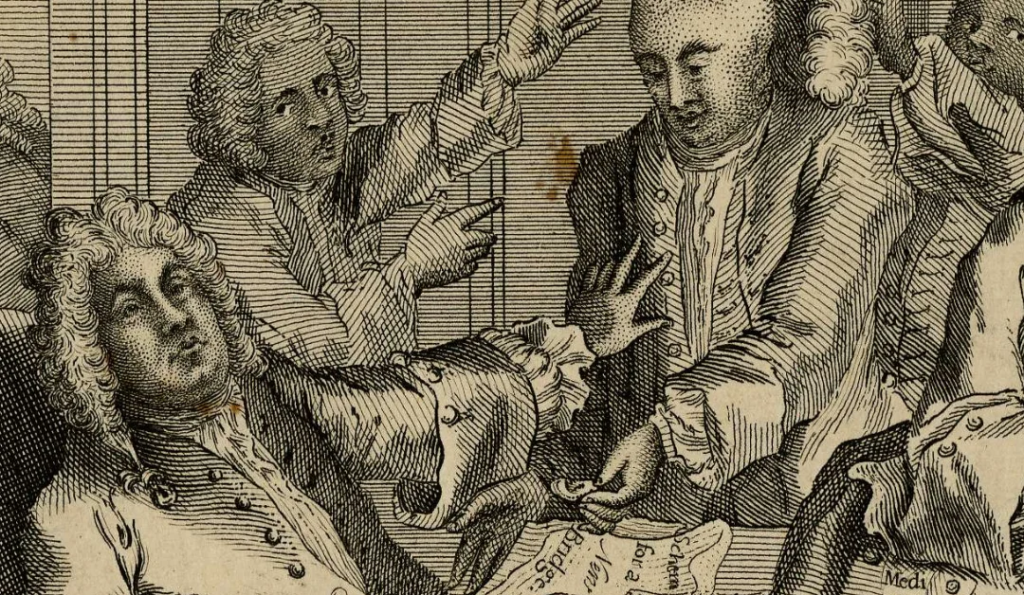
The namesake incident occurred in 1731 when the British merchant ship Rebecca was intercepted off the coast of Florida. The Spanish commander, Juan de León Fandiño, accused Captain Robert Jenkins of smuggling and, as punishment, severed the captain’s ear with his cutlass. Legend has it that the commander handed the ear back to Jenkins, saying: “Take this to your king and tell him that I would do the same to him were he here.” Although Jenkins reported the incident, the British government—unwilling to sever ties with Spain at the time—initially hushed the matter. Seven years later, in 1738, the opposition in Parliament sought to force Prime Minister Robert Walpole into war by accusing him of passivity. They summoned Jenkins as a witness. When Jenkins presented his severed ear, preserved in a jar, to the Members of Parliament, it triggered a massive explosion of public and parliamentary fury. Britain officially declared war in October 1739.
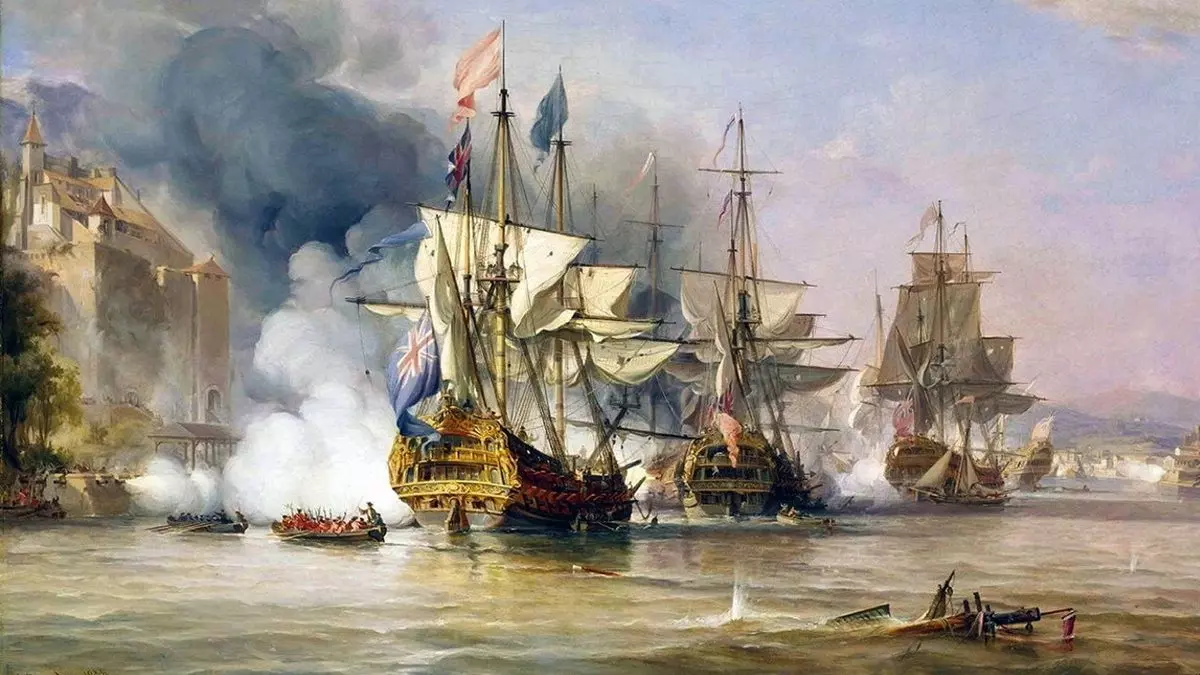
The military phase of the war centered on the strategy of seizing the trade routes of the Americas and the Caribbean. British Admiral Edward Vernon achieved early success by capturing the port of Portobello in Panama with only six ships. However, in 1741, the British suffered a crushing defeat at the Siege of Cartagena de Indias in modern-day Colombia, losing nearly 10,000 men to both Spanish defenses and outbreaks of yellow fever and dysentery. This defeat dealt a blow to Britain’s dreams of absolute hegemony over the Caribbean. In the years that followed, the conflict merged into the much larger War of the Austrian Succession (1740–1748), spreading across a vast geography and losing its original focus.
When the war officially ended with the Treaty of Aix-la-Chapelle in 1748, the outcome was a return to the “status quo ante bellum” (the state existing before the war). The treaty produced no radical changes in borders or commercial rights; territories captured by Britain were returned to Spain, and the Asiento concession was soon abolished entirely. Costing tens of thousands of lives and immense naval expenditures, this war stands as a stark example of how a severed ear in a jar can trigger imperial politics and how commercial friction can be transformed into a narrative of personal vengeance.
Read more: War of Jenkins’ Ear
Philosophical Perspective:
Foucault & the Construction of Truth: To view the War of Jenkins’ Ear merely through a piece of decaying flesh is to miss the deeper reality; this event is a laboratory for “emotional management” and the “construction of truth” within political philosophy. Through Michel Foucault’s lens, placing that ear in the center of Parliament seven years after the fact is a perfect example of how power produces “truth” from scratch to legitimize economic interests. British politicians, knowing they could not incite the public by debating complex trade tariffs or maritime law, abandoned rational discourse in favor of a “victimhood” performance. The reality of the ear’s owner mattered less than the myth of “national honor” it represented.
Agamben & the Biopolitical Threshold: It is impossible not to encounter Giorgio Agamben’s thoughts on biopolitics here. The moment Robert Jenkins’ body was mutilated, it ceased to be a matter of individual pain and was pulled into the sovereign domain of the state. Agamben’s concept of the “Homo Sacer” works in reverse here: the violation of an individual’s bodily integrity was coded as an attack on the “body” of the British Empire. A physical piece of a human being became fuel for macro-politics. The state converted a citizen’s past physical trauma into “sacred rage” to serve geopolitical ambitions, placing individual biology at the service of national ideology.
Le Bon & Mass Psychology: The public hysteria leads us to Gustave Le Bon’s dark warnings on crowd psychology. Le Bon argued that the masses are moved not by logic, but by powerful imagery. Had the Parliament presented complex economic reports, the public might have yawned; however, that “proof of barbarism” in a jar paralyzed their reason and ignited their imagination. For the masses, an image is more authentic than a thousand pages of data.
Hobbes & the State of Nature: Finally, Thomas Hobbes’ “man is a wolf to man” manifests at the state level. In a Hobbesian state of nature—the lawlessness between empires—the ear was merely a “casus belli” (a pretext for war). The underlying reality was the desire to rule the seas and swallow the rival. History shows that even the most “rational” empires will hide behind the most primitive and emotional symbols when it comes to mobilizing the masses.