“An entire imperial navy, hundreds of soldiers, and lethal warships… It all began with a massive diplomatic crisis, yet what altered the course of history was neither a brilliant strategy nor a deadly cannonball.
The war came to an abrupt end all because a single soup cauldron exploded. So, how did the rational human intellect completely surrender to the noise made by a mere kitchen utensil?”
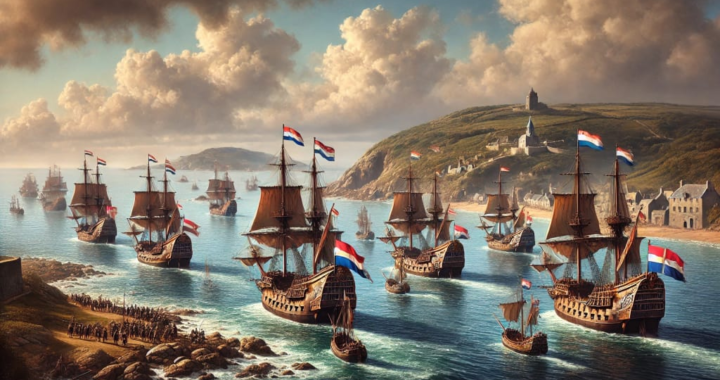
The year was 1784. The cards in Europe had been reshuffled. With the “Diplomatic Revolution” of 1756, Austria and France had become allies, while the Netherlands distanced itself from its traditional allies to maintain neutrality. However, Holy Roman Emperor Joseph II saw that the Dutch were exhausted from their war with the British and did not want to miss this opportunity. He intended to forcibly reopen the Scheldt River, which had been closed since 1585, to revive the ports of Antwerp and Ghent. This meant severing the economic artery of the Netherlands, particularly Amsterdam.The Emperor was so certain the Dutch would retreat in fear that he risked war despite his regional army’s lack of full ammunition and supplies. While the merchant ship Le Louis, flying the Imperial flag, advanced down the river, the famous Dutch ship Dolfijn intercepted it.
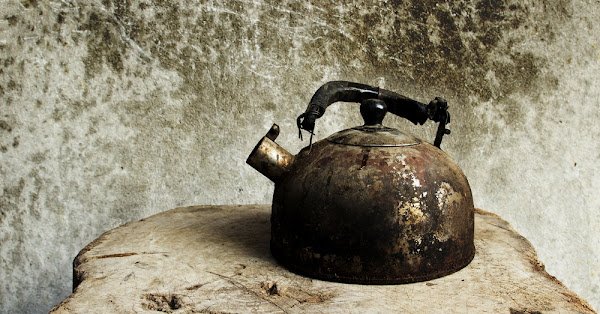
Though the Dutch were capable of firing a full seven-gun broadside, they fired only a single shot. This “lucky” or “fateful” projectile did not hit a strategic point on the ship; instead, it struck the soup kettle where the crew’s dinner was cooking.To the captain of Le Louis, this explosion was a symbol of Dutch resolve. The great flagship surrendered within seconds as a pot of soup was splattered across the deck. When Joseph received this news, he flew into a rage and officially declared war on October 30.Fort Lillo and the Submerged Lands The war did not remain confined to the river.
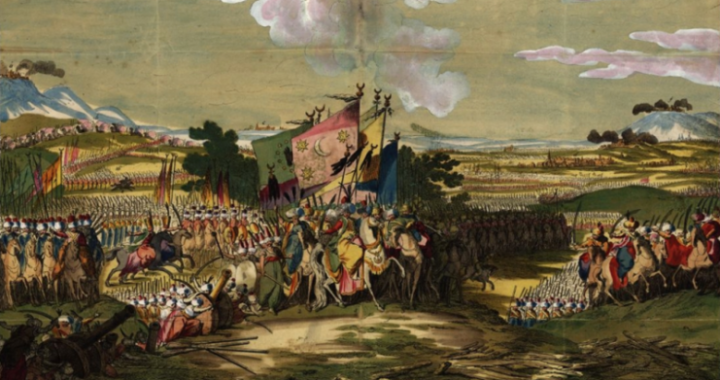
Austrian troops attacked by land, destroying a customs station and occupying the old Fort Lillo, which soldiers used as a vegetable garden at the time. This is the darkest part of the story: as a last resort to stop the enemy, the Dutch garrison at Lillo breached the dikes. The waters of the North Sea rapidly flooded the land; as vast territories were submerged, not only the invading soldiers but also many civilians in the region perished in this sudden inundation.
To defend its land, the power had sacrificed both its land and its people.At the end of the war, the Treaty of Fontainebleau was signed through French mediation. The river remained closed, but the Dutch paid a heavy price for their audacity in “hitting the kettle”: they paid approximately 10 million guilders in compensation to the Empire. This event also led to a major internal purge; Louis Ernest, Duke of Brunswick-Lüneburg, an influential advisor of the time, was declared a “traitor” due to his proximity to the Emperor and was dismissed from his post.
Read more: The Kettle War: The Historical Conflict Settled by a Single Soup PotPhilosophical Dimension:
1. Paul Virilio and the Integral Accident Modern strategy theorist Paul Virilio states that every new invention brings its own accident: when you invent the ship, you invent the shipwreck; when you invent the plane, you invent the crash. In the Kettle War, the flagship Le Louis is the pinnacle of the “Politicization of the Kitchen Accident.” By launching the ship into the river, the Empire made not just military force, but all the daily life inside that ship (dinner time, soup, the kettle) a part of the war. The explosion of the kettle is the surrender of military technology to the fragility of everyday life. This shows how massive systems can be paralyzed through their weakest link: “human needs.”
2. Object-Oriented Ontology (OOO) Traditional history centers on human will; we say, “The captain surrendered” or “The Emperor declared war.” However, if we look through the lens of Object-Oriented Ontology conceptualized by Graham Harman, the primary actor here is neither the captain nor the Emperor. The true subject of that moment is the soup kettle that breasted the projectile and scattered “horror” by exploding. At that moment, the kettle escaped human control and imposed its own physical reality (exploding and scalding) upon history. Thousands of years of human political goals remained entirely ineffective against the molecular fragmentation of a metal object. This is proof that history is a “field of conflict” not just between humans, but between objects and humans.
3. Ecological Suicide and the Anthropocene The Dutch breaching the dikes was not a simple defensive tactic, but a pre-“Anthropocene” (Age of Humans) attempt at ecological suicide. When the state decides to destroy the ground upon which it stands (the land) to stop the enemy, it shakes its own existential foundation. The philosophical tragedy here is: destroying the very thing you are fighting for (the homeland) in order to win. This demonstrates how blind and destructive the power’s survival instinct can be. Nature is not framed here as a “subject,” but as a “weapon” ready to explode in the hands of power; yet, when that weapon is fired, it swallows not only the enemy but also the one who fired it and their people.
“Technological Accident” (The Integral Accident): The idea that every technological development carries its own specific disaster; the very existence of the ship accepts from the start the possibility (the accident) of the entire system collapsing due to a kettle exploding.
“Object-Oriented Ontology” (OOO): The acceptance of objects (kettles, water, dikes) in historical events not merely as tools used by humans, but as actors that produce results in their own right and direct the process.
“Geographic Suicide” (Territorial Suicide): The irreversible destruction of a power’s own physical sphere of existence (land, ecosystem) for the purpose of eliminating an external threat.
“Black Swan”: An unpredictable, extreme event—such as the fate of a war merging with dinner time—that no strategist put on the table, but which changes the world after it occurs.
“Ironic Determinism”: The “mocking” progression of history created by the chasm between the gravity of causes (imperial ambition) and the absurdity of results (the explosion of a soup kettle).