“Could becoming the secret emperor of a state and wielding a power that loomed even above the Sultan truly protect you from absolute death?
As a new era dawned with the conquest of Istanbul, those all-knowing, wise eyes fading into the darkness of the Yedikule dungeons were not witnessing the mere fall of a grand vizier; they were watching a centuries-old aristocracy being utterly crushed by a young, uncompromising, and relentless will…”
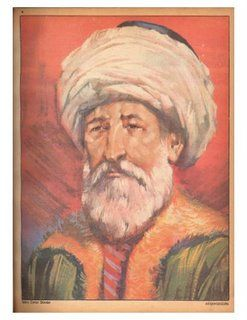
The conquest of Istanbul did not only open the gates of a city; it also closed a century-long era in Ottoman administration. Çandarlı Halil Pasha was the leader of the most powerful family in the Ottoman state to date. Both his father and grandfather had served as Grand Viziers; indeed, the Çandarlı family was perceived as the “true owners of the state.” When the young Sultan Mehmet ascended the throne, Halil Pasha acted almost as a “guardian” toward him, reining in the young Sultan’s decisions.During the siege, Çandarlı feared a Crusader intervention from Europe and argued that the conquest was impossible. Rumors even spread within the army that he was “taking bribes from Byzantium.” However, when the walls crumbled and Istanbul fell, this great victory did not just grant the Ottomans a capital; it gave Fatih the legitimacy required to annihilate this massive noble family standing against him.Only a few days had passed since the conquest. Fatih had Çandarlı Halil Pasha arrested.
This was a first in Ottoman history; the apprehension of a Grand Vizier in such a manner was unimaginable until that day. The matter of the “eyes” carries a horror that is both physical and metaphorical. When Çandarlı was thrown into the dungeon, Fatih did not just take his life; he shredded every atom of his power before his very eyes. While the Pasha awaited execution in his cell, he was forced to witness the confiscation of his family’s entire wealth and the erasure of his sons from the state ranks. The entire world Çandarlı had built was destroyed while he was still alive, watching from behind the bars of his cell.
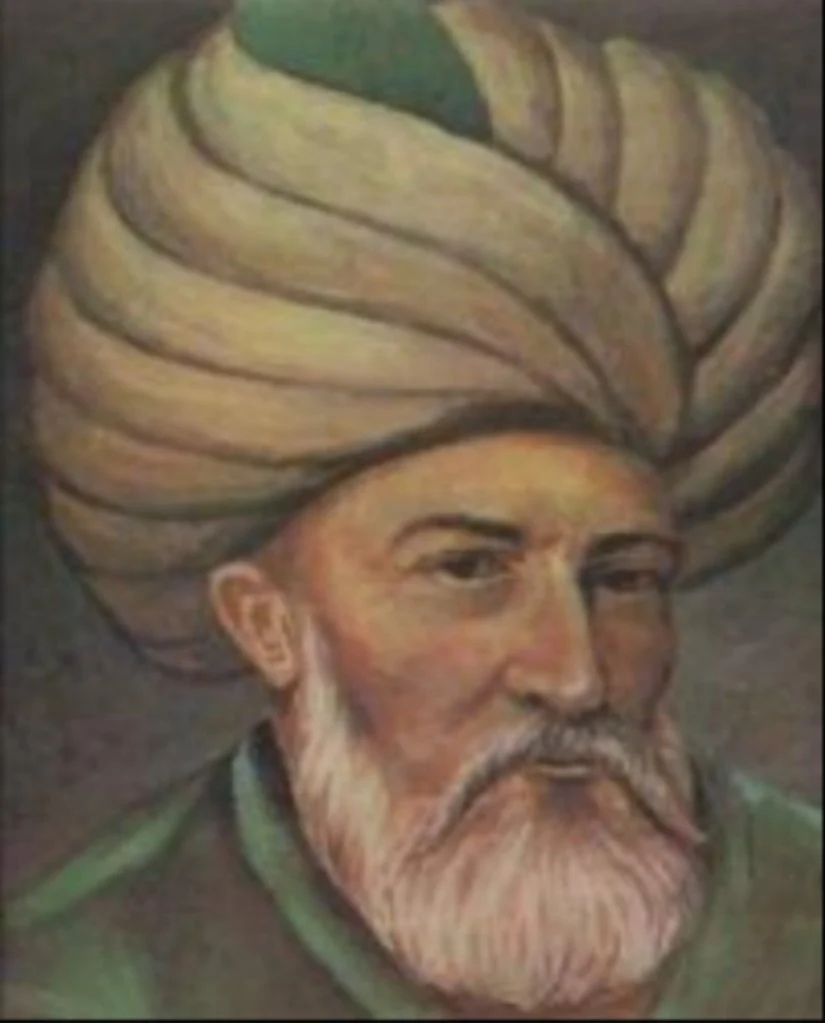
Çandarlı Halil Pasha was executed by strangulation in Yedikule in June 1453. According to some accounts, his eyes were blinded with a hot iron (mil çekilmesi) just before his death, or the execution was carried out under the direct supervision of the Sultan. However, the truly jarring aspect was the message Fatih delivered with this execution: “In this state, there is no noble, no power other than me.” With Çandarlı’s death, the path was cleared for bureaucrats of “devshirme” (conscripted) origin, and the Ottoman Empire evolved from a structure managed by noble families into an absolute monarchy governed by servants beholden only to the Sultan.
Read more: The Eyes of Candarli Halil PashaPhilosophical Dimension:
The Çandarlı family was a structure in the Ottoman state that stood almost as a “second authority” alongside the Sultan, with roots perceived as older than the state itself. They functioned as an aristocratic oversight mechanism, balancing the decisions of the Sultans. By liquidating this power immediately after the conquest, Fatih utilized the gray area we call the State of Exception. He suspended the office of the Grand Vizier—accepted as “untouchable” until that day—and the sanctity of that office overnight. The confiscation of Çandarlı’s assets and the shredding of his entire political legacy before his eyes while he awaited execution is a perfect example of Symbolic Violence. The goal here was not merely to take a life, but to render the massive image of nobility represented by the Pasha null and void while he was still breathing. By seizing Çandarlı’s property, the power withered his social roots and deprived him of his weight within history.
This execution was not just the punishment of a crime, but a Sacrificial Ritual chosen for the construction of a new governance model. By sacrificing Çandarlı, Fatih gave the following message to all state dignitaries: “Nobility no longer exists; there is only loyalty to me.” This situation created a massive Panopticon effect on the bureaucracy. Every statesman, no nobler how brilliant their past, was now aware that they were under the Sultan’s surveillance and could transform into a Homo Sacer—a “bare life” unprotected by law—with a single move.
The fact that the execution was carried out silently yet with great gravity proves the state’s capacity for Necropolitics—how it uses even death as a tool for constructing authority. The Pasha’s final hours in the dungeon were not just a physical end, but the erasure of an era from the memory of the state. By eliminating Çandarlı’s body, Fatih constructed a new ontological reality stating, “there is no room for any center of power other than mine.” From this point forward, Grand Viziers were no longer “partners” of the Sultan, but his “servants.”
State of Exception (İstisna Hali): The extra-legal void where the sovereign suspends the rules of law by his own will, legitimizing what cannot be done under normal conditions (such as destroying an untouchable tradition).
Homo Sacer: A life stripped of social and legal identity, whose killing is not considered a crime but whose sacrifice is also forbidden; a life left abandoned in its purely biological existence.
Symbolic Violence: The destruction of an individual’s spiritual resistance and social existence through the demolition of reputation, status, property, and family ties, rather than through physical blows.
Necropolitics: The ability of political power to frame death not just as a biological end, but as a political spectacle that consolidates authority and instills fear and order in the masses.
Panopticon: An invisible but omnipresent eye of power that creates the feeling of being watched at every moment, ensuring the individual controls their own behavior according to the wishes of the authority.
Sacrificial Ritual: The ceremonial and jarring destruction of the strongest symbol of the old order to make a new system absolute and to rewrite the social contract.