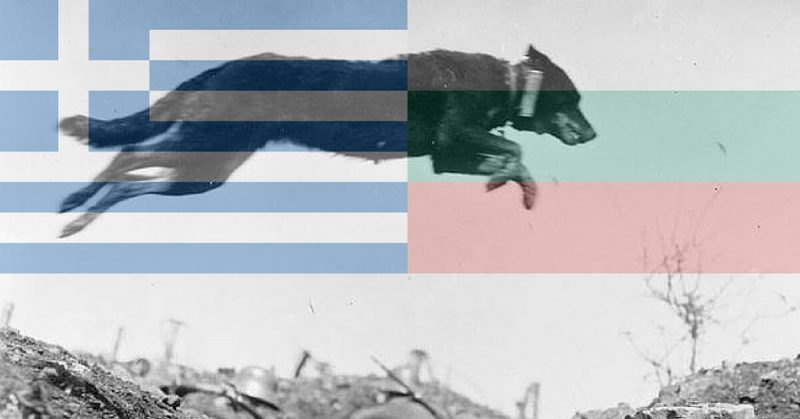
“Could the fate of massive empires, border lines, and thousands of soldiers truly depend one day on a single soldier following an ordinary stray dog?
In an event that completely shatters the solemnity of history books, how did a matter of honor, ignited by a single dog crossing a border, escalate into an international war where armies clashed and hundreds lost their lives? Here is that absurd border story, altered forever by a single bark…”
The War of the Stray Dog, known in historical literature as the Incident at Petrich, was a diplomatic and military crisis that broke out in October 1925 between Greece and Bulgaria, where a minor border violation rapidly escalated into a full-scale military invasion. At the time, the Balkans were characterized by an extremely tense atmosphere fueled by minority issues, territorial claims, and insurgent activities—a legacy of the Balkan Wars and World War I. The border lines, particularly in the Macedonia region, were areas where both sides remained on high alert, and even the smallest friction carried the potential for armed conflict.
The triggering event of the crisis occurred on October 19, 1925, near the Demirhisar (Sidirokastro) border crossing. According to most historical accounts, a Greek border guard’s dog crossed the Bulgarian border, and the soldier followed the animal, thereby violating the frontier. During this breach, Bulgarian border guards opened fire, killing the Greek soldier. As the skirmish on the scene escalated, a Greek officer advanced toward the Bulgarian positions with a white flag to de-escalate the situation, but he too was shot and killed. These two deaths were treated as a casus belli (justification for war) by the Greek military government led by General Theodoros Pangalos in Athens, leading to a harsh ultimatum issued to Bulgaria.
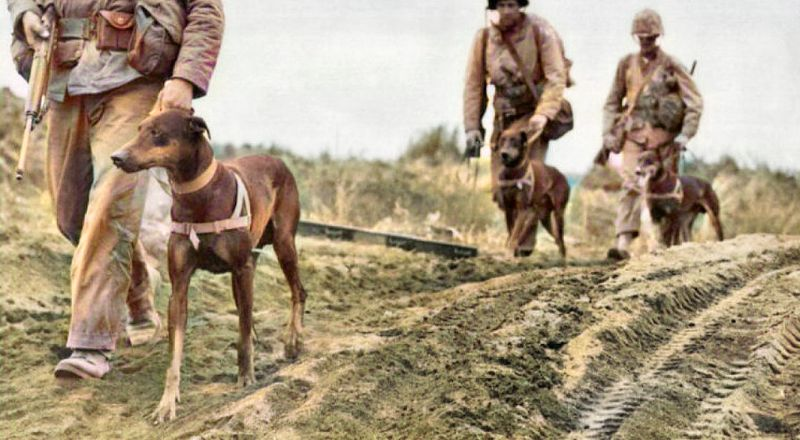
Greece demanded an official apology from Bulgaria, the punishment of those responsible, and 2 million French francs in compensation for the families of the fallen soldiers. Although the Bulgarian government maintained that the incident was a misunderstanding and proposed the establishment of an investigatory commission, the Greek army crossed the border on October 22 on the grounds that their demands had not been met, occupying the area around the Bulgarian town of Petrich. During the invasion, artillery fire and air strikes were conducted, resulting in the deaths of approximately 50 people, most of whom were civilians. Due to its limited military capacity, the Bulgarian army chose to retreat and bring the matter to the newly established League of Nations rather than engaging in a direct all-out war.
The League of Nations regarded this crisis as one of its first major tests and intervened immediately, calling for a ceasefire between the parties. An investigative commission established by the League characterized the Greek intervention as an “unjustified invasion” and ordered the immediate withdrawal of Greek troops. Under the ruling, Greece was sentenced to pay 45,000 British pounds in compensation for the material damages inflicted upon Bulgaria. Although Greece initially objected, arguing that Italy had committed a similar act during the Corfu Incident of 1923 without being punished, it eventually paid the fine under pressure from the great powers and withdrew its forces from Petrich. This event has gone down in history as one of the shortest and strangest border wars, beginning with the death of a soldier following a stray dog but ultimately serving as an explosion of the deep-seated distrust in the Balkans.
Read more: The War of the Stray DogPhilosophical Perspective:
The Petrich Incident is more than just a story of an invasion born from a dog’s border crossing; it is a philosophical tragicomedy that demonstrates how the massive “state” mechanism built by humans hangs by a thread. In examining this event, the first name that comes to mind is Thomas Hobbes. Hobbes argued that humans are inherently selfish and that states, as “Leviathans,” live in a constant security dilemma. This is exactly what happened at Petrich: the “state of nature”—the condition of absolute distrust—between these nations was so profound that a few random steps by a dog were enough to trigger the muzzles of an entire army. From a Hobbesian perspective, that border line is not just a piece of land but the protective armor of sovereignty, and even a dog bumping into that armor is perceived as a threat to the Leviathan’s existence.
Here, we must also involve Hannah Arendt and her reflections on the “banality of evil.” Arendt explains that great catastrophes are not always created by great monsters, but sometimes by small cogs—bureaucrats or soldiers—who simply follow instructions and suspend their capacity to think. In the mind of the soldier who pulled the trigger at the border or the general who ordered the invasion, there was likely no thought of the dog’s innocence, but rather the “sanctity of protocol.” The act of “following a dog,” a human reflex, was translated into the word “invasion” within the system’s rational but soulless language. Arendt whispers to us here that systems become so mechanized that they swallow the human being and their simple reality, leaving behind nothing but maps, ultimatums, and rifle barrels.
Finally, it would be an injustice to this event not to mention Albert Camus’ concept of the “absurd.” According to Camus, the universe is silent, and man searches for meaning within this silence only to find meaninglessness. The fact that the fate of thousands of people, demands for 2 million francs, and bombs dropped from planes were rooted in “a dog running freely” is the pinnacle of absurdity. This war is proof that history is not a rational progression but a sequence of entirely coincidental and sometimes comically ridiculous events. To speak sincerely, the Petrich Incident is a portrait of how the “sublime values” defended so earnestly by humanity—homeland, honor, borders—can turn into a joke at the very invisible line where a dog crosses while wagging its tail.
