Born in Rome in 816 A.D., Formosus became the Bishop of Porto after a childhood spent in church education. Thanks to his diplomatic talents, he conducted critical negotiations in several major capitals, during which he met Arnulf, the King of the Franks. Arnulf’s dream was to establish dominance over Italy and become the Holy Roman Emperor; however, the only way to wear that crown was to receive the Pope’s blessing.Formosus’s rapprochement with Arnulf did not go unnoticed by the Vatican. The reigning Pope, John VIII, grew suspicious of Formosus’s rising power, excommunicated him, and stripped him of his duties. Fearing for his life, Formosus sought refuge with the King of Italy. Following the death of John VIII, he was pardoned and reinstated by the succeeding Pope, Marinus I. During the reign of Stephen V, who followed Marinus, King Guy of Italy forced his own coronation as emperor. However, when Stephen died before the coronation could be fully solidified, the papacy passed to Formosus.
 Reluctantly, Formosus crowned the King of Italy, but immediately following the ceremony, he sent a secret letter to his old friend Arnulf, urging him to invade Italy. While Arnulf’s attacks continued, the King of Italy died and was succeeded by his son, Lambert. Realizing the Pope’s betrayal, Lambert imprisoned him. However, Arnulf arrived with his army, rescued Formosus, and claimed victory. Despite Lambert still being alive, Formosus crowned Arnulf. Three months after this event, Formosus passed away.Pope Stephen VI, who took the throne after Formosus’s death, was a staunch supporter of Lambert and the Italian faction. Seeking revenge for Formosus’s collaboration with Arnulf, Stephen made a horrifying decision that would go down in history: to put a dead man on trial.
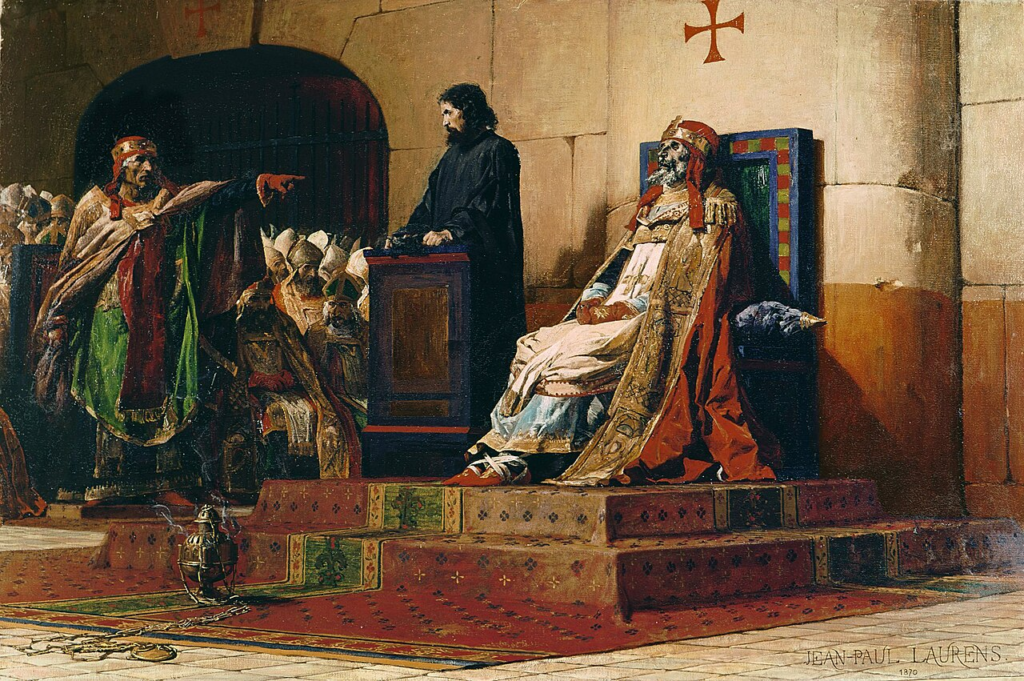
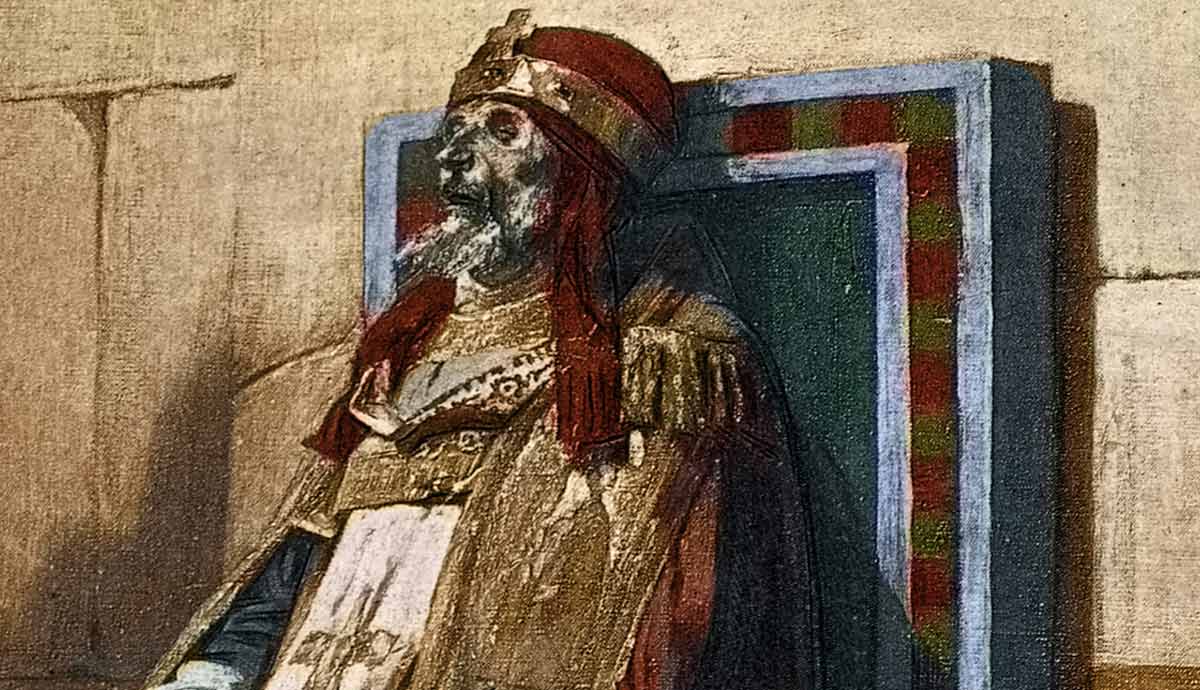
In this event, which took place in 897 A.D., Formosus’s body—which had been underground for nine months—was exhumed. Dressed in papal vestments and seated on the defendant’s chair, a terrified young priest was placed beside the corpse to offer a defense on his behalf. Stephen VI shouted his accusations at the lifeless body with fury. At the end of the trial, Formosus was found guilty; all his acts during his papacy were annulled, and the three fingers of his right hand used for blessings were hacked off. His body was first buried in a common cemetery, then later dug up and thrown into the Tiber River.Two important legends regarding this event have survived to this day:
The Divine Sign: A violent earthquake occurred in Rome during the trial; the people interpreted this as “even the stones being unable to endure this scandal in the Church and crying out with their own voices.”The Fisherman’s Net: It is said that the body thrown into the river was caught in a fisherman’s net, brought ashore, and secretly reburied by supporters of Formosus.This atrocity incensed the Roman people so much that in the ensuing riot shortly after, Pope Stephen VI was imprisoned and strangled to death.
Read more: The Cadaver Synod
Philosophical Dimension:
When we examine this event—which is met with horror and amazement in today’s world—from a deeper perspective, it can be seen that both sides carried a sense of “justification” from their own vantage points. The event must be filtered through a philosophical lens regarding Stephen, Lambert, and the public.
The primary motivation for Stephen and Lambert in reaching this radical decision can be interpreted through the “Will to Power” and the “Theory of the King’s Two Bodies.” Although Formosus was physically deceased, his ideas and political legacy remained very much alive. For his successor Stephen, Formosus was an obstacle that had to be overcome even in the grave; because in the eyes of citizens who did not know Formosus’s “true face” and the “Formosans” who still existed, his value overshadowed Stephen’s authority. It is unacceptable for a ruler to remain in the shadow of their predecessor.On the other hand, Lambert was the victim directly affected by these events. As a leader who had been betrayed, he was the person least likely to make a rational decision. Restoring the honor of a tarnished office and ending the “holy” remembrance of a man he viewed as a traitor was an unbearable necessity for him. They attempted to make the legal process appear so flawless and legitimate—even appointing a lawyer to a dead defendant—that it was a desperate effort to place this absurd theater on a “legal” foundation.
When looking at the public’s perspective, we encounter a tragic picture of “Epistemic Arrogance.” In an age where the dissemination of information was limited, it was impossible for the public to know every detail. For them, Formosus was a spiritual leader who had worn the crown of the Holy Roman Empire. The masses, unaware of their lack of information or perhaps having that lack exploited for specific interests, were horrified by this “trial of the dead” presented by the ruler.
The real question here is: Who is guilty? The manipulated public, or the ruler who succumbed to his ambitions? While the owner of the guilt becomes blurred, the perpetrator of the disaster is clear.Ultimately, it is possible to explain this tableau within the framework of Absurdism. Although human nature claims to be rational, it is often a slave to its own ego and ambitions. A Pope sitting a corpse on a throne and screaming at it represents the point where logic ends and the pathology of power begins. The fact that power instrumentalizes reality and even death to prove its own legitimacy is one of the greatest and most tragic absurdities in human history.
Epistemic Arrogance: This concept refers to a person’s failure to recognize the limits of their own knowledge and treating limited information as absolute truth to establish dominance over others.
The King’s Two Bodies Theory: Based on the idea that political authorities possess both a biological (mortal) and an institutional (immortal) identity.
The Will to Power and Resentment (Hinc) Theory: This title examines how far a person or institution can go to destroy a preceding power and the origins of that hatred.