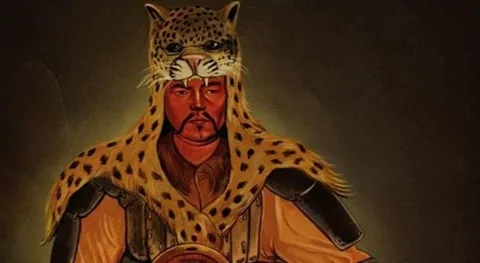
“A baby depicted with feet like a bull and a waist like a wolf, demanding raw meat and wine on the very day he was born… Was he merely the leader of a tribe, or the earthly shadow of a divine power descending from the heavens?
What ancient secret altering the course of history was that mysterious sky-leafed wolf, who guided his every step, actually whispering to him? We are pulling back the curtain on that first world empire where the sun was the banner and the sky was the tent…”
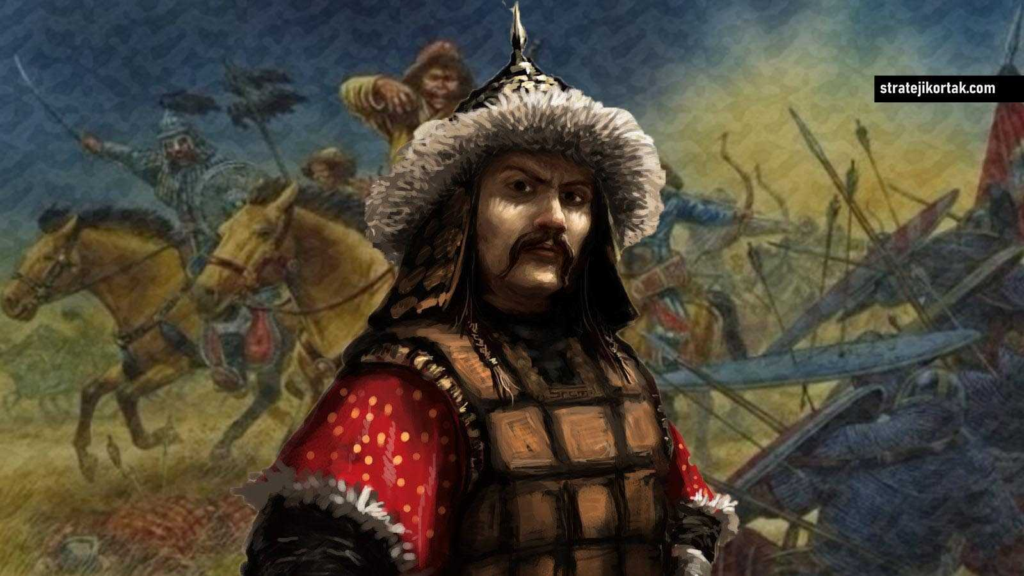
The Epic of Oguz Kagan is the fundamental text of Turkic mythology and the tradition of state-building. It is an epic narrative widely accepted to be shaped around the life of the Hun Emperor, Mete Han. The epic summarizes the origins of the Turks, their social structure, and their concept of world dominance through symbolic language. A manuscript written in the Uyghur alphabet is preserved in the National Library of France in Paris, containing various versions that include both pre-Islamic and post-Islamic elements.
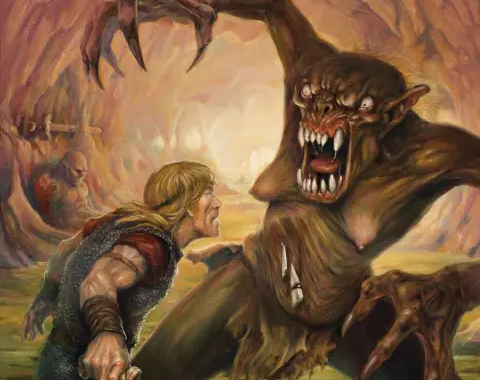
The narrative begins with the miraculous birth of Oguz Kagan. When Oguz was born, his face was blue, his mouth was as red as fire, and his eyes were hazel; he began to speak as soon as he was born, and forty days later, he grew up, began to walk, ride horses, and hunt. During his youth, he proved his heroism by single-handedly hunting a massive rhinoceros (or a similar beast) called “Kiyant” that was harming his people and their herds. This event ensured that his leadership qualities were recognized by society.
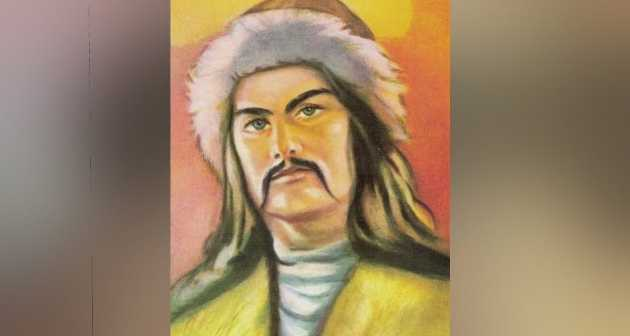
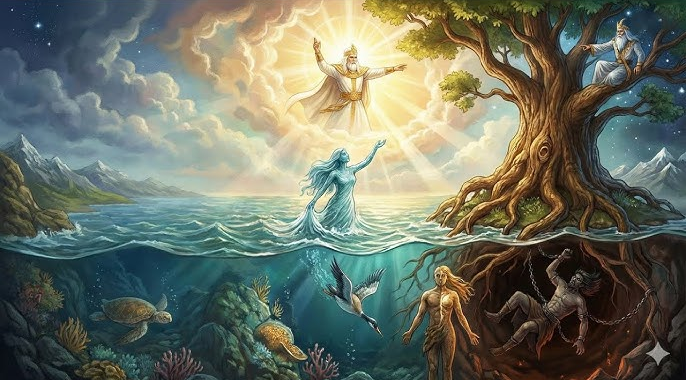
One of the most important turning points in Oguz Kagan’s life is his marriages and his children. His first wife is a divine woman who emerged from a blue light descending from the sky; from her, he has three sons named Sun, Moon, and Star. His second wife is a woman he found in a tree hollow in the middle of a lake; from her, three more sons named Sky, Mountain, and Sea are born. These six sons would form the foundation of the future twenty-four Oguz tribes. After proclaiming his sovereignty, Oguz organizes expeditions to the four corners of the world (China, India, Iran, Egypt) under the guidance of a sky-maned, sky-furred wolf that descended from the heavens, establishing Turkic unity.
The final section of the epic is critical for laying the foundations of the Turkic state organization and inheritance law. As he ages, Oguz Kagan divides his empire among his sons. He establishes a hierarchy by placing his elder sons (the Bozoks), born of the wife from the celestial light, on his right side, and his younger sons (the Üçoks), born of the wife from the tree hollow, on his left. He delivers his testament to them, saying: “O my sons, I have fought much, and now I have grown old. I have paid my debt to the Sky God (Gök Tanrı). I leave my homeland to you.” The Epic of Oguz Kagan serves as a historical and legendary constitution of Turkic identity, presenting the ideal of universal sovereignty, family structure, and military discipline as a cohesive whole.
—Turkish Epic—