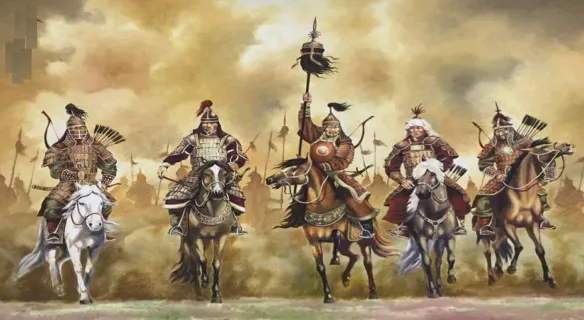
“Could the destiny of a state truly be hidden within a single piece of rock deemed sacred? How did a single diplomatic blunder by those holding power drown the nature, animals, and people of an entire geography in a collective scream?
Here is the story of the sacred skies abandoning the Turkish homeland, and the mystic collapse of a nation that began with the desperate cries of ‘Migrate!’…”
The Epic of Migration is a sorrowful narrative belonging to the Uyghur Turks and serves as a sequel to the Epic of Creation. It recounts the catastrophes and forced displacement experienced by a nation after losing the values it considers sacred. Shaped according to information found in Chinese and Islamic sources, the epic reflects the Turkic concept of homeland and the sacred bond established with nature through symbolic language.
The plot of the epic begins with the Uyghur Khan, Yulun Tigin, seeking to establish a political peace with the Chinese. To solidify this peace, the Khan decides to marry his son, Gali Tigin, to a Chinese princess named Kiu-Lien. In exchange for this marriage, the Chinese demand a sacred rock from Mount Hulin known as the “Sacred Mountain” (or the Rock of God), which is believed to be the source of prosperity, unity, and abundance in the Uyghur lands. The Khan fails to realize that this rock is far too vital to be used as a political bargaining chip and grants the request of the Chinese.
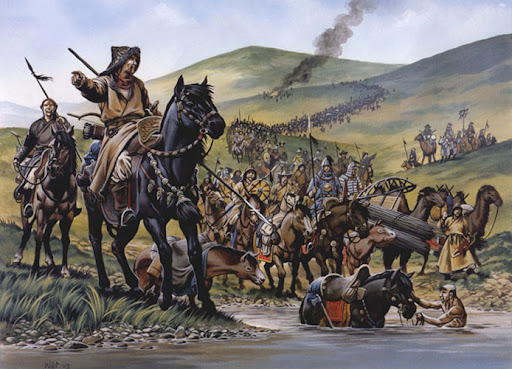
Because of the rock’s immense size, the Chinese are unable to transport it whole. They pile wood around it, light a fire to heat the rock, and then pour vinegar over it to shatter it into pieces. The fragmented sacred rock is then hauled away to China on carts. With the departure of the sacred stone from the land, a great misfortune befalls the Uyghur territories. The sky suddenly darkens, the cries of birds and domestic animals change, rivers dry up, and the earth begins to crack. Most hauntingly, every living thing in the country—even the wind and the trees—is heard crying out, “Migrate! Migrate!”
Faced with this divine warning and a devastating famine, the Uyghurs realize they can no longer hold onto their homeland. Tens of thousands of people, along with their livestock, abandon their homes and embark on a grueling journey toward the west. This massive movement continues until they reach the Beshbalik region, where the Uyghurs attempt to build a new life. The Epic of Migration serves as a historical lesson, illustrating that a society can be destroyed not only by military defeat but also by the loss of its spiritual values and harmony with nature; it teaches that sacrificing even a small piece of the homeland puts the future of the entire nation at risk.
—Turkish Epic—