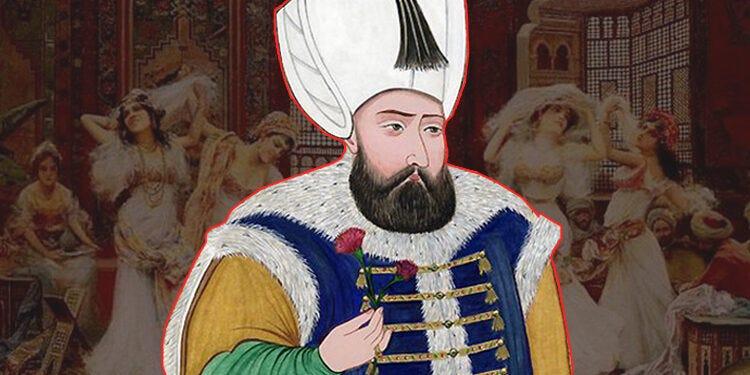
“Does being the absolute ruler of a world empire mean being able to govern everything? While ruling a state whose borders spanned three continents, Sultan Murad III became a captive of harem intrigues, astrology, and mystical dreams within the corridors of his own palace. How does he illustrate that deep and dark loneliness in the inner world of a person at the peak of power?
Here is the mysterious portrait of a padishah who never marched to war at the head of his armies, yet fought the greatest battles of his life right inside his throne room…”
Murad, who set out from Manisa upon the news of his father Selim II’s death in 1574 and entered Istanbul secretly, faced the harsh and bloody reality of the empire on his first night on the throne by having his five brothers strangled; however, throughout his reign, he took refuge behind the marble walls of the palace, in a mystical world he built himself, to escape this reality. Unlike his grandfather Suleiman the Magnificent, who led armies on campaigns, this sultan, who did not even step out of Istanbul during his 21-year reign and even refused to leave the palace with an “agoraphobic” fear, tried to manage power not from the Imperial Council (Divan-ı Hümayun), but from the depths of his sleep. While this introversion brought the period known as the “Sultanate of Women” to its peak in the palace corridors, the fate of the state was surrendered to the competition between his mother Nurbanu Sultan and his wife Safiye Sultan.
Murad, on the other hand, enriched his escape from this worldly noise with a huge entertainment staff consisting of dwarves, jesters, and mutes, and an obsession with mechanical clocks. Among the tick-tock sounds coming from every corner of the palace, the sultan, who painted a portrait of a monarch trying to measure time perhaps because he could not manage it, broke the dynasty record with more than a hundred children, but was actually isolated from the outside world and imprisoned in the “human colony” he created himself. The personality of Murad III is the meeting of a tremendous intellectual genius and an unbelievable destructiveness in the same body. On one hand stands the Istanbul Observatory, the most advanced science center of the period, which he had Taqi ad-Din establish in 1577; on the other hand, there is a hand that had this observatory bombarded and demolished by his own order, influenced by those who said “watching the stars is ill-omened.”
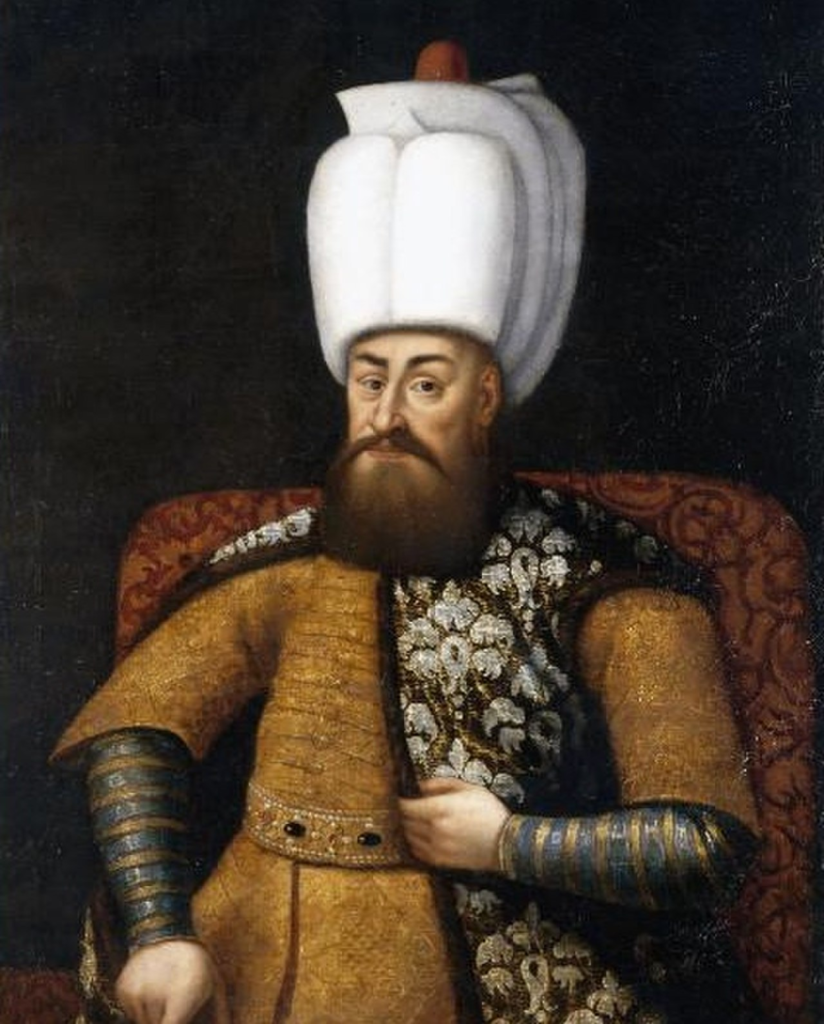
Although he was an aesthetic enthusiast who wrote the most elegant poems of Divan literature under the pseudonym “Muradi” and kept the golden age of miniature art alive, he was the first name to start breaking the ticking clock of the empire by introducing bribery into the state bureaucracy as a system. The most shocking area in his life is his dreams. According to what he told in his dream journal, Kitabü’l-Menâmât, he saw God saying to him in his dream, “I wish I had created you even before the prophets,” and with this metaphysical confirmation, he moved that giant ego, which worldly power could not satisfy, to a divine level. This situation is the desire to surpass the rational limits of power and place oneself at the center of a cosmic hierarchy.
Even his death occurred in accordance with this mystical construction; while sitting in the Sinan Pasha Pavilion in 1595, he interpreted the breaking of the pavilion’s windows during the navy’s ceremonial salute as his “own salute,” understood that his time was up, and passed away shortly after suffering a stroke. Murad III remained suspended between a “saint-madman” sitting on the throne and an misunderstood “artist,” leaving behind an imperial legacy that was tried to be managed with dreams but shaken by the harsh winds of reality.