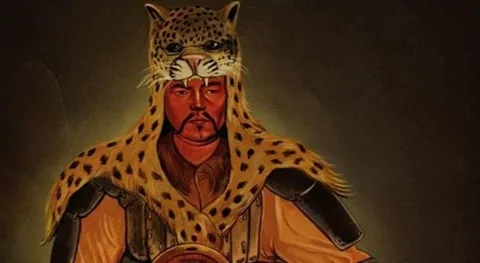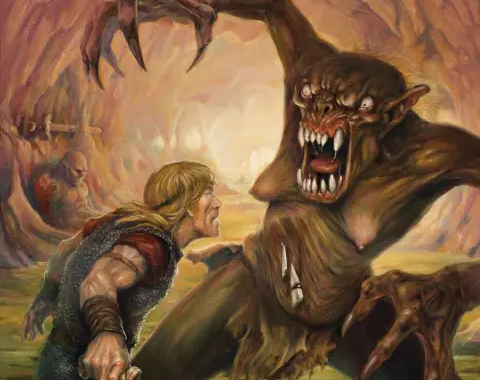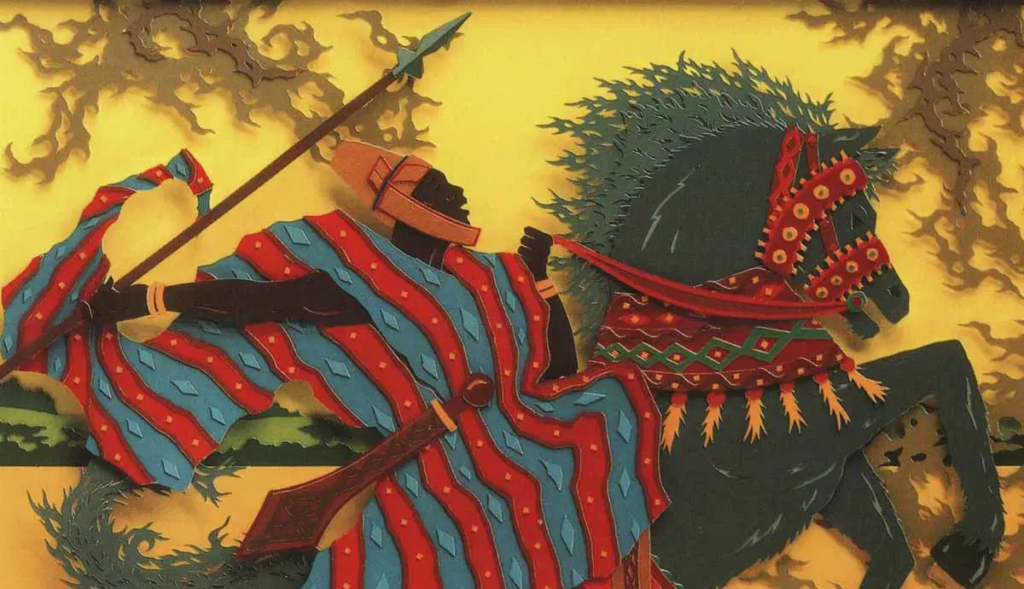
“How did a child who couldn’t walk throughout his entire childhood, who was despised in the palace for his disability, and exiled from the kingdom, manage to establish West Africa’s wealthiest, most powerful empire and transform into the true ‘Lion King’?
And more importantly, what mystical secret did he have to decipher to break the hidden talisman of the sorcerer-king who sought to destroy him? Here is that dark, fascinating, and bloody historical reality hidden behind children’s cartoons…”
the Epic of Sundiata is the most significant oral history and literary treasure of West Africa, recounting the life and heroism of Sundiata Keita, the founder of the Mali Empire in the 13th century. Transmitted through generations by professional storytellers known as “Griots”—the guardians of societal memory—this epic narrative blends historical realities with the rich mythological elements of West African culture.
The epic begins with a prophecy delivered to Maghan Kon Fatta, the ruler of the small Mandinka kingdom of Mali. A seer tells the king that if he marries an ugly woman, their union will produce one of the greatest rulers the world has ever known. Following the prophecy, the king marries Sogolon Kondé, known as the “buffalo woman,” and Sundiata is born. However, Sundiata’s childhood begins with great misfortune; he is unable to walk or speak until the age of seven and remains physically frail. Upon his father’s death, the king’s other wife, Sassouma Bérété, installs her own son, Dankaran Touman, on the throne and exiles Sundiata and his mother, subjecting them to constant humiliation.
The turning point in Sundiata’s life occurs when, spurred by an insult directed at his mother, he pulls himself up using an iron rod and uproots a massive baobab tree, placing it at his mother’s feet. This miraculous display of strength is the first sign of his future greatness. However, as the hostility at court persists, Sundiata and his family embark on a long exile that lasts many years. During this period, he travels through various kingdoms, honing his military and diplomatic skills, gathering allies, and gaining prestige wherever he goes.
Meanwhile, the cruel sorcerer-king of the Sosso, Soumaoro Kanté, invades the Mandinka lands and begins to oppress the people. Realizing that liberation is only possible through Sundiata, the Mandinka people send envoys to find him. Sundiata returns with an allied army. The historic Battle of Kirina in 1235 serves as the epic’s climax. Because of his black magic powers, Soumaoro is invincible against traditional weapons. However, Sundiata discovers his enemy’s weakness—that he can be wounded by a cock’s spur—and defeats him.
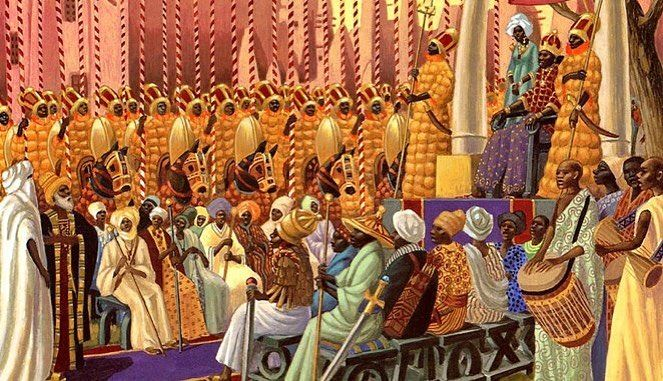
Following the victory, Sundiata establishes the Mali Empire and is proclaimed “Mansa” (King of Kings) by the assembled tribal leaders. The epic does not end merely as a tale of war; it details how Sundiata organized society, established peace, and set forth the constitutional principles known as the “Kurukan Fuga,” which regulated human rights and social duties. Beyond being a “rise of the underdog” story, the Epic of Sundiata is the fundamental source carrying West Africa’s social structure, traditions, and sense of justice to the present day.
—West African Epic—