“It all began when a man who had completely lost his way in life turned back from the brink of suicide and knocked on the gates of hell. But what if Dante’s dark journey into the afterlife in the year 1300 wasn’t actually just a religious allegory, but a raw, ruthless operation performed directly upon the darkest recesses of human psychology?”
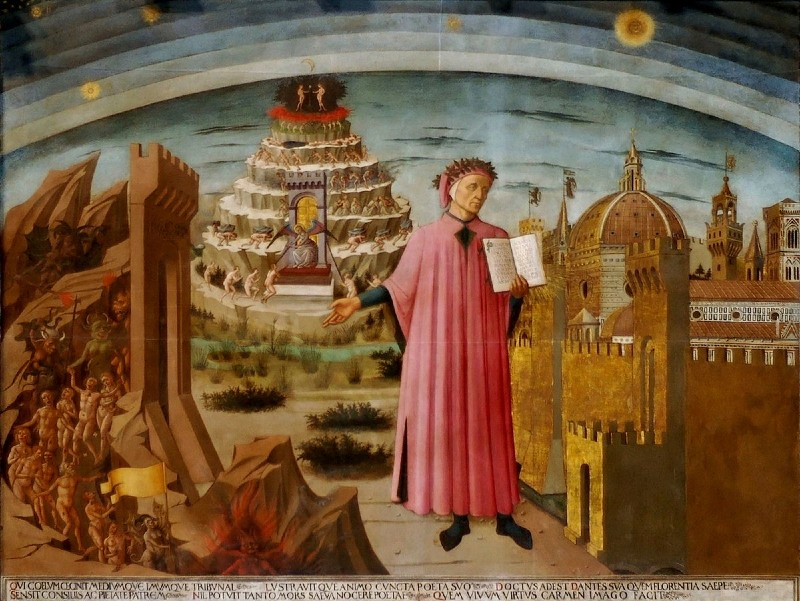
The Divine Comedy (Divina Commedia) is one of the most significant epic works of world literature, penned by the Italian poet Dante Alighieri at the beginning of the 14th century (between 1308 and 1320). The work was written in Italian (the Tuscan dialect) spoken by the common people instead of Latin, which was the language of science and literature at the time; in this respect, it is considered the foundation of modern Italian. This massive epic, consisting of a total of 14,233 lines, is comprised of three main sections: Inferno (Hell), Purgatorio (Purgatory), and Paradiso (Paradise). Each section consists of 33 cantos (for a total of 100 cantos, including the introductory canto in Inferno), and the work is written in a tightly interwoven triple-rhyme scheme known as “terza rima.”
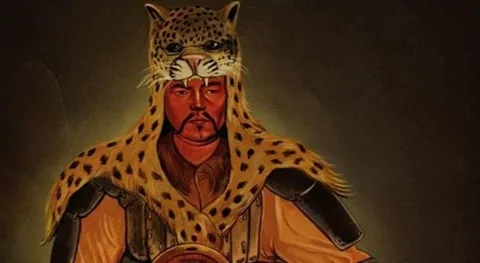
The plot begins with Dante finding himself lost in a dark wood during the Easter week of the year 1300. While fleeing from three wild beasts—a leopard, a lion, and a she-wolf—that block his path, he encounters Virgil, the great poet of ancient Rome. Virgil offers to guide Dante through the afterlife. The first stop of the journey, the Inferno, consists of nine concentric circles narrowing toward the center of the Earth. Here, sinners are eternally punished according to the nature of their crimes, following the principle of “contrapasso” (retribution). At the very depth, in the frozen lake where traitors are kept, lies Lucifer, a massive three-faced creature.
After passing through Hell and reaching Mount Purgatory at the other end of the world, Dante and Virgil encounter souls waiting to be purified of their sins. Purgatory consists of seven terraces representing the seven deadly sins. At the summit of the mountain—the Terrestrial Paradise—Virgil completes his guidance because, as a pagan, he cannot enter Heaven according to Christian belief. For the remainder of the journey, Dante is guided by Beatrice, his great love and source of inspiration. Paradise consists of nine celestial spheres surrounding the Earth, in accordance with medieval cosmology. Each sphere hosts souls possessing different virtues. At the end of the journey, Dante reaches the highest level, called the “Empyrean,” where he is overwhelmed by the vision of divine light, completing his pilgrimage.
The Divine Comedy is not merely a religious text; it is a work where medieval philosophy, theology, astronomy, and politics are intertwined. By featuring the political figures, popes of his era, and heroes of antiquity, Dante offers a profound social and moral critique. The work narrates the universal human struggle to rise from the depths of sin to the highest spiritual rank through the paths of reason (Virgil) and faith (Beatrice). The phrase at the very end of the text, “The Love that moves the sun and the other stars,” is the fundamental motif that summarizes the cosmic and spiritual order of the entire epic.
—Italian Epic—