“An entire empire reduced to ashes over the span of ten years all for the love of a woman, and a king who wages war against gods, monsters, and his own psyche just to return home…
Are these lines, whispered thousands of years ago by Homer as a blind bard, merely ancient mythology, or are they the encoded reality of human history’s greatest traumas? We are prying open the lines of this epic journey that stretches from the towering walls of Troy to the dark whirlpools of the deep ocean…”
The epic narratives of the Iliad and the Odyssey, considered the unshakable foundations of Western literature, are a massive body of epics reaching us from approximately three thousand years ago, portraying the anger, patience, and cunning of the human soul to its core. Believed to have been penned by Homer, these stories actually depict two great successive tales: the story of a destruction and the subsequent story of a return.The Iliad focuses on the most critical fifty-day period in the final year of the ten-year Trojan War, rather than telling the entire duration of the conflict. The story begins with the crushing of the honor of the demigod warrior Achilles and his subsequent devastating rage.
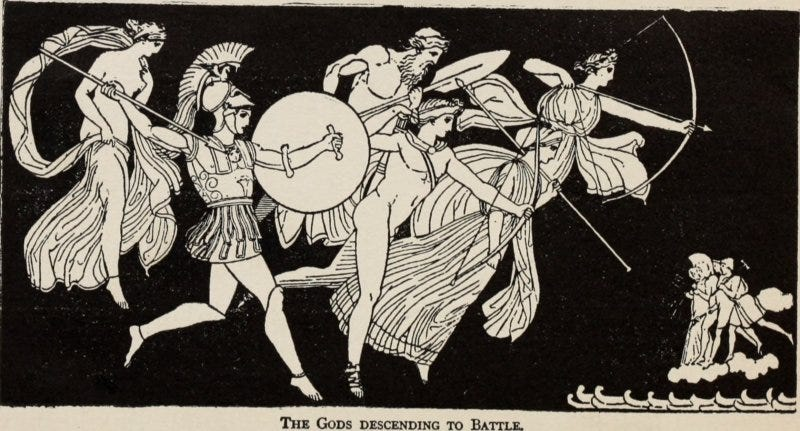
Due to a personal conflict with Agamemnon, the commander-in-chief of the Greek army, Achilles stops fighting and retreats to his tent. With his withdrawal from the field, the Trojans, led by Troy’s noble prince and greatest protector, Hector, push the Greeks back all the way to their ships. The Olympian gods in the sky do not remain idle during this struggle; Hera and Athena support the Greeks, while Apollo and Aphrodite support the Trojans, personally influencing the course of the war.
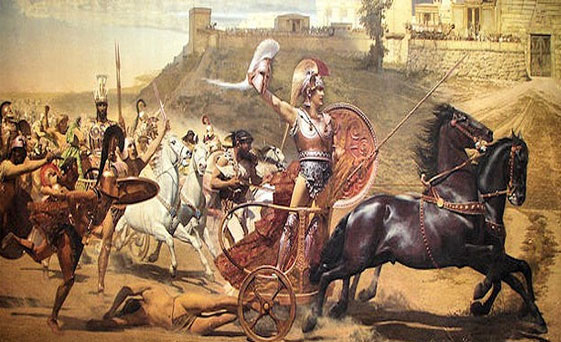
Achilles’ return to battle is only made possible when his dearest friend, Patroclus, is killed by Hector. Burning with the fire of revenge, Achilles takes to the field with terrifying fury, kills Hector in a one-on-one duel, and humiliates his lifeless body by dragging it behind his chariot. The epic ends with King Priam of Troy falling at his enemy’s feet to retrieve his son’s corpse and a mournful funeral ceremony.The Odyssey, on the other hand, takes place after the weapons have fallen silent and Troy has been leveled by the famous wooden horse trick. The hero of this epic is Odysseus, the King of Ithaca, known for his sharp intellect rather than just raw physical strength. The war is over, and all the kings have returned home, but Odysseus falls under a curse from the sea god Poseidon for blinding his son, the Cyclops. His ten-year journey home harbors a different danger at every stop.
Odysseus and his crew are tested by the sorceress Circe turning his men into pigs, the Sirens drawing sailors to their deaths with their enchanting songs, and his seven-year imprisonment on the island of the nymph Calypso. During this time, Odysseus’ loyal wife, Penelope, tries to cope with dozens of suitors who have swarmed the palace, assuming her husband is dead and seeking to seize the throne. At the end of twenty years, returning to his country disguised as a beggar, Odysseus unites with his loyal son Telemachus and eliminates the suitors occupying the palace. While Homer depicts the tragedy of war in the Iliad, he consecrates the tremendous will and intelligence a man shows to reunite with his home in the Odyssey, thus concluding an epic adventure with profound human depth.
—Greek Epic—