“How did the glorious ruler of a nation turn into a dark demon ruling the underworld in the eyes of his enemies? What was the secret code behind a king, undefeated on the battlefields, hunting all alone in a mysterious cave?
Here are those darkest contradictions that history books did not dare to write, where mythology and reality choke one another…”
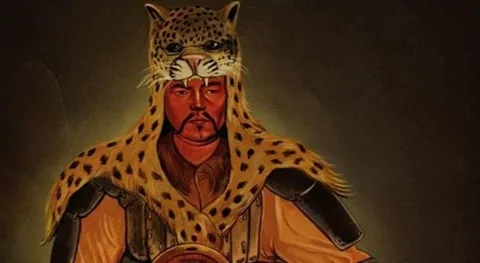
The Epic of Alper Tunga is one of the oldest epics in Turkic literary history, focusing on the life, heroism, and death of Alper Tunga, the ruler of the Saka (Scythian) Turks who lived in the 7th century BCE. Historically, the Sakas are recognized as one of the first Turkic communities to establish dominance over a vast geography stretching from Central Asia to Eastern Europe. The epic centers on the Turkic-Persian wars of this era and the figure of Alper Tunga at the heart of these conflicts.
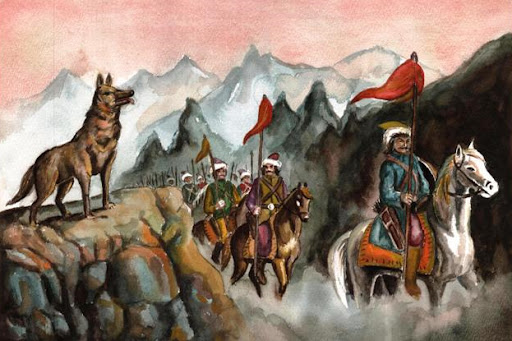
The main outlines of the epic have reached the present day through Turkic sources as well as the narratives in the famous work Shahnameh by the Persian poet Ferdowsi. Known in Persian sources by the name “Afrasiyab,” Alper Tunga is depicted as the greatest and most formidable enemy of the Persians. Yet, even in hostile sources, he is portrayed not just as a warrior, but as an exceptionally wise ruler with strategic genius who governed his armies with absolute discipline. According to the epic, Alper Tunga united the Turkic tribes under a single flag and realized the ideal of Turan by organizing numerous expeditions against Persia.
The fundamental conflict in the narrative is the unending struggle for dominance between the Persian kings and Alper Tunga. He is described as a leader whose arm could not be twisted on the battlefield. However, the most tragic and historically impactful part of the epic is his death. According to records, because Alper Tunga could not be defeated in open combat, he was invited to a banquet by the Persian ruler Kay Khosrow (or Rustam, son of Zal, in some sources) under the pretext of peace negotiations; there, he was killed through deception, either by poisoning or an ambush.
His death caused a profound shock in the Turkic world, leading to the creation of the famous lament known as a “Sagu.” This Sagu, transcribed by Kaşgarlı Mahmud in the Dīwān Lughāt al-Turk, is one of the oldest known lyric texts in Turkic literature. Beginning with the lines “Has Alper Tunga died? / Is the desolate world left behind? / Has time taken its revenge? / Now the heart is torn,” the lament expresses not just the loss of a ruler, but the societal grief felt over the belief that the world had become unjust (desolate) in his absence. The Epic of Alper Tunga remains one of the most deep-rooted narratives of the prehistoric era, symbolizing the Turkic tradition of statehood, warrior identity, and the vital importance a leader holds for his people.
—Turkish Epic—